

The way we travel is always evolving. New flight routes open, cultural scenes gain momentum, and destinations that once felt distant begin welcoming visitors on their own terms. Right now, there are places around the world, from the deserts of Saudi Arabia and the forests of northern Japan to the river systems of the Brazilian Amazon and the shores of Lake Malawi, that offer depth and room to explore without the intensity of massive crowds. To that end, we interviewed several travel advisors and tour operators to find out which places are in that sweet under-the-radar spot now, so you can experience them before they get popular over the next few years.
The Brazilian Amazon

Along the Rio Negro, small expedition vessels are opening more thoughtful, community-minded ways to explore the Brazilian Amazon.
Photo by Alex Fisberg/Shutterstock
There’s been a change in that some great operators have started bringing boats onto the Rio Negro and Tapajós where you can tailor-make an amazing bespoke Brazilian Amazon experience for the curious traveler. The smaller boats of only 20 to 25 people have the ability to access tributaries of the Rio Negro that allow for your own experience of the place, and because you have a bespoke schedule, you are able to meet more remote communities that you wouldn’t with a traditional, stock schedule. Many communities often don’t want to engage with massive groups of people coming off a boat. Our focus has always been the regenerative side of travel and asking, “If we are going to support the operators out there, how is it being done? How is it supporting the community?” The smaller boats work with communities out there and offer a far more thoughtful and sustainable approach.
—Tom Marchant, cofounder, Black Tomato
Comporta, Portugal

In Comporta, dune-backed beaches and design-forward boutiques deliver Portugal’s laid-back coastal appeal without the Algarve crowds.
Photo by Michelle Heimerman (L); photo by Ze Fontes/Shutterstock (R)
So Portugal is on everybody’s radar, but the Comporta region is one of those places that offers a destination by the water, but it’s not the Algarve, which is so overrun in the high season that you aren’t getting that restful, unplugged atmosphere you might want. Comporta gives you kind of the anti-Algarve; it’s a bit more natural in the setting and has a boho vibe to it with boutique hotels that are very “barefoot luxury,” but feel low key and intentional. Comporta is a nice way to still get the draw of Portugal, but not the crowds of some of the more well-known destinations within the country near the water, which can be hard to find.
—Brianna Glenn, founder, Milk + Honey Travels
Devon and Dorset, England’s Jurassic Coast

Along England’s Jurassic Coast, dramatic cliffs give way to fishing villages still largely under the international radar.
Photo by Daniel J Schwarz/Unsplash
Over the last 10 years, for many people visiting the U.K., it’s always been London, Edinburgh, and the Cotswolds. And whilst the Cotswolds are beautiful, they’ve become overrun with crowds of people pouring into these tiny towns. In Somerset and along the Jurassic Coast in South Devon and Dorset, you have these picture-postcard fishing villages with rolling hills. It’s also Agatha Christie country and still home to some of the most incredible literature coming out. There’s this town called Salcombe, which has one of the most stunning estuaries you’ll ever come across, and the beaches in the summer are like being on the French Riviera. If you’ve seen that film The Roses with Benedict Cumberbatch and Olivia Colman, that was filmed in Salcombe with all of those dramatic cliffs and beaches. That whole area down there is fascinating and a bit of a secret to a lot of people outside of the U.K. It’s still very much where the English will go on holiday.
—Tom Marchant, cofounder, Black Tomato
Malta

Ancient Fortress in Citadel rises above Victoria city, a historic landmark with panoramic views in Gozo, Malta.
Photo by Artush/Shutterstock
There are new nonstop flights on Delta from New York to Malta (seasonally starting in June), and so many Americans have never been. It’s a small country [of three islands, Malta, Comino, and Gozo] in the middle of the Mediterranean Sea that has Italian, Arab, French, and British influences that permeate the culture. It’s a fascinating destination that appeals to people who want a place that’s a bit off the beaten track, but has everything from food and wine touring to ancient ruins and archaeological sites [six Michelin-starred restaurants, local wines and cheeses, an UNESCO-recognized sourdough bread, and a Taste History program that re-creates ancient menus], plus beautiful scenery, beautiful beaches, World War I and II historic tours, religious tours. It offers something for everyone, honestly. It’s also a decent year-round destination, but most people go from the spring through the late autumn and avoid the middle of the winter. It’s more crowded in the summer during peak season, but if you go during shoulder season in the spring and fall, it’s really not crowded at all.
—Ashley Isaacs Ganz, founder, Artisans of Leisure
North Macedonia

In North Macedonia, cities like Skopje reveal layered Ottoman and Balkan history alongside a slower, more contemplative pace.
Photo by Ahmed/Unsplash
I recently planned a Balkans road trip for a pair of well-traveled grandparents who wanted to explore a region they’d never been to, before going on a multi-generational trip to Greece. We decided on North Macedonia and it has so much to offer in terms of depth without density. Specifically, Skopje and Lake Ohrid have a nice contrast of layers of Ottoman history in the capital city, then a serene and restful stay near the lake. On a road trip you can add on places that are more familiar or less so, like maybe going into Albania or Montenegro, but as far as places that aren’t on a lot of people’s radar right now, I would say North Macedonia.
—Brianna Glenn, founder, Milk + Honey Travels
Panama
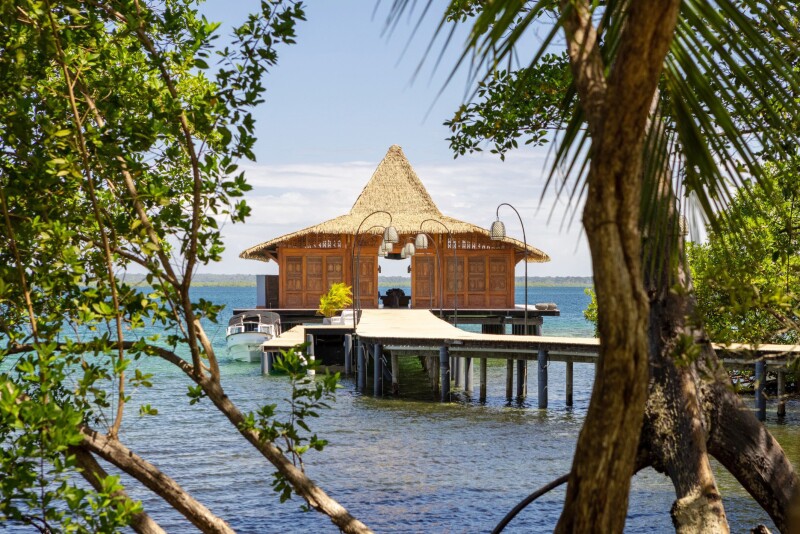
Overwater stays in Bocas del Toro reflect Panama’s growing appeal for travelers seeking both rainforest adventure and Caribbean calm.
Courtesy of Nayara Resorts
I personally love Panama and that’s because the first research trip I took with Black Tomato 20 years ago was to Panama. I remember even two decades ago having this incredible time in the old town of Panama City, then a day later I was kayaking up the Panama Canal. Today, Panama is quietly emerging and piquing a lot of interest and for good reason. The lodging has improved loads, and the wildlife and natural experiences you can have there are phenomenal. Then there’s the experience of going to the Guna Yala Archipelago (formerly known as the San Blas Archipelago), where we have an exclusive to us glamping option called Blink, and Bocas del Torre, where I’d recommend staying at Nayara Bocas del Toro (adults only) or Sweet Bocas for family trips. You can travel across the country for a very Caribbean experience on one side, and then a very Latin American spirit on the Pacific side. It’s pretty special down there, and I think Panama’s going to be on a lot of people’s lips this year and beyond.
—Tom Marchant, cofounder, Black Tomato
Royal Deeside, Scotland

Snow dusts the Fife Arms in Braemar, gateway to Scotland’s Cairngorms National Park.
Courtesy the Fife Arms
Most first-time visitors to Scotland are more likely to go to Edinburgh, but I think the Royal Deeside area of Aberdeenshire is where to go for a quintessentially Scottish travel experience. It’s got the highland scenery and one of the most incredible national parks, the Cairngorms National Park, and it’s where so many of the royal sites are (hence the name) like Balmoral Castle, the Scottish residence of the royal family since the 19th century. The Fife Arms is a charming luxury hotel in the town of Braemar with beautiful decor, including a fascinating collection of contemporary art compiled by the owners, who also operate a well-known chain of art galleries. All of the big whisky distilleries are also about an hour’s drive from Royal Deeside in the Speyside region, and you can do a tour that includes Macallan, Glenfiddich, and Glenlivet. It truly feels like all of the most charming towns in Scotland are there within a 15-minute walk of each other. The scenery is just totally stunning.
—Ashley Isaacs Ganz, founder, Artisans of Leisure
Saudi Arabia

Mirrored Maraya Concert Hall in Ashar Valley of AlUla reflects the desert landscape, modern architecture and natural beauty of Saudi Arabia.
Photo by Nicola Messana Photos/Shutterstock
There’s so much change on the horizon in Saudi Arabia in terms of cultural tourism and luxury hotels. Many people will fly into one city like Riyadh and out of Jeddah and connect somewhere else to visit a few different spots because once they start looking into it, they realize how much there is to see. If someone wanted a comprehensive tour, they’d do Riyadh, Jeddah, AlUla, and the Red Sea. With the Red Sea, there’s a lot of new development, but I’d say the most important place is AlUla, where there’s Hegra, a Nabataean archaeological site. Most know Petra, but there are similar ruins in Saudi Arabia, and they are a must-see. There’s also a major contemporary art scene starting in Saudi Arabia [including] a teamLab Borderless installation in Jeddah. As far as hotels, there’s Nujuma, a Ritz-Carlton Reserve on the Red Sea, and Four Seasons and Aman are opening several properties across the country. This is really going to be a place to watch over the next few years.
—Ashley Isaacs Ganz, founder, Artisans of Leisure
Switzerland’s rural regions

Lesser-known corners of Switzerland offer Alpine beauty without the crowds.
Photo by Adamus.photography/Shutterstock; photo by Sina Ettmer Photography/Shutterstock
Switzerland has a host of areas that are so stunning and lesser known that locals like going to that have been off the radar because of the strikingness of some other overtouristed places. Like Appenzell, which is famous for its cheese, but also where you can do amazing hikes from Wasserauen to Seealpsee and not be surrounded by busloads of tourists. There’s also the Vallée de Joux surrounded by the Jura mountains, which is the heart of the watchmaking industry. Another is the area called Ticcini, which is near Ticino, very close to the Italian border. There’s an incredible blend of Swiss and Italian culture, amazing hikes, 15th-century castles in the Verzasca Valley, and great Italian and Swiss wines. You will feel like you’re stepping into the local country.
—Tom Marchant, cofounder, Black Tomato
Tohoku, Japan

At Yamadera, hikers pause at Godaido Hall, one of Tohoku’s many temple sites set deep in the mountains.
Photo by Terence Toh Chin Eng/Shutterstock
Lately we’re sending people to Tohoku, a region in northern Japan about two hours by bullet train from Tokyo. It’s typically where people who have visited Japan three to five times go who want to experience very traditional culture. There are beautiful mountain temples and shrines like Yamadera, a stunning Buddhist temple complex built into mountain cliffs, and Haguro-san, a sacred mountain with pagodas and temples dotted throughout an ancient forest and connected by stone pathways. There are rural villages, rugged coastlines, natural hot springs, and Tohoku is a wonderful hiking destination. We usually organize having a monk hike with our clients to different pilgrimage sites, and this is also a great place to find important crafts including wooden tansu chests, cast-iron tea kettles, and lacquerware.
—Ashley Isaacs Ganz, founder, Artisans of Leisure
Uruguay

Uruguay’s Punta del Diablo blends wild Atlantic coastline with the country’s understated food and wine scene.
Photo by Wirestock Creators/Shutterstock
Uruguay has a quiet confidence in terms of amazing food and wine, and a beautiful coastline, all of the things that people are looking for when they are traveling, but it’s not top of mind when people are planning a trip that can fulfill those needs. Even outside of peak summer season, Uruguay still has temperate weather, so you can go there year round and have an upscale, refined vacation without being showy. Uruguay also deserves recognition because it’s such an incredible value. South America is in general a pretty good value, but then to add a place in South America that isn’t really on anybody’s radar and still has all of that incredible food, wine, and scenery? That can be a huge hit for people.
—Brianna Glenn, founder, Milk + Honey Travels
Zambia and Malawi

A sunset paddle on Lake Malawi captures the slower rhythm of this under-the-radar southern Africa journey.
Photo by Berwid/Shutterstock
I’m a huge proponent for everybody having an experience on the African continent in some way, whether that’s sub-Saharan Africa, West Africa, or wherever. But Zambia and Malawi was an Africa trip I did about a year and a half ago, and Zambia was such a surprise because it felt so much more immersive and personal than other safari destinations. When you go to South Africa, Tanzania, or Kenya, there are so many people doing the same thing, looking at the same animals. Whereas Zambia doesn’t have the same number of tourists, but the areas like South Luangwa National Park or the Lower Zambezi National Park are beautiful and you won’t see any other people. There’s also the river so you have the land safari experience and the water safari experience.
Then the bigger surprise is Malawi. It is overlooked in terms of African destinations, but super relaxing and incredibly grounding. There’s Lake Malawi, a huge freshwater lake, and the gorgeous Kaya Mawa lodge right on the lake. After you spend all your time adventuring, seeing all the animals, you get to have an escape that still feels very African.
—Brianna Glenn, founder, Milk + Honey Travels


